You scrub, you flush, and the bottom of the bowl stays brown, even black. It isn't poor hygiene: it's limescale, and a toilet brush can't do anything about it. Cleaning removes dirt; descaling dissolves the limescale that holds it. They are two different jobs.
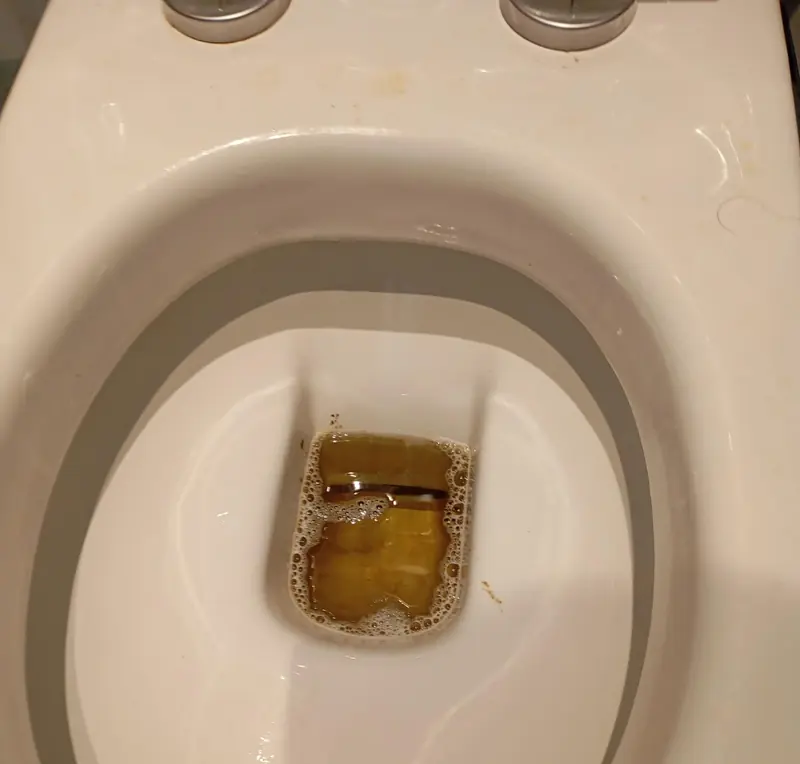
The photos on this page come from our jobs in Paris and the inner suburbs. They show the most common cases, from a simple yellow ring to a toilet left neglected for years.
Why the bottom of the bowl turns black
Paris tap water is moderately hard to hard: between 19 and 28 French degrees depending on the network. Water sitting in the bowl leaves that limescale behind day after day, especially at the waterline and in the trap.
Limescale + urine = urinary scale
Limescale combines with urine residue into a rough crust. That crust then catches everything that passes, which is why it turns brown, then black. The thicker it gets, the more dirt it holds and the faster it grows.
Yellow or brown streaks under the rim
They follow the path of the flush water. They form even in toilets cleaned every week, because ordinary toilet cleaner disinfects but doesn't descale.
White or grey deposit
Almost pure limescale, common in rarely used toilets (second homes, empty flats before a let). It comes off easily, as long as you treat it before it darkens.
Identify your type of deposit (real photos)
The right treatment depends on what you see. Here are the four cases we meet most often.
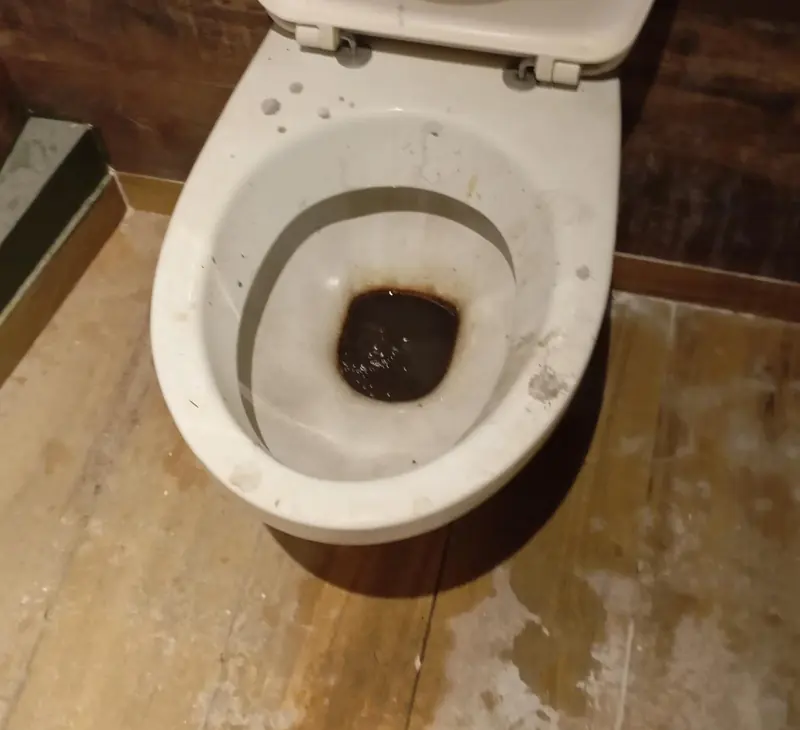
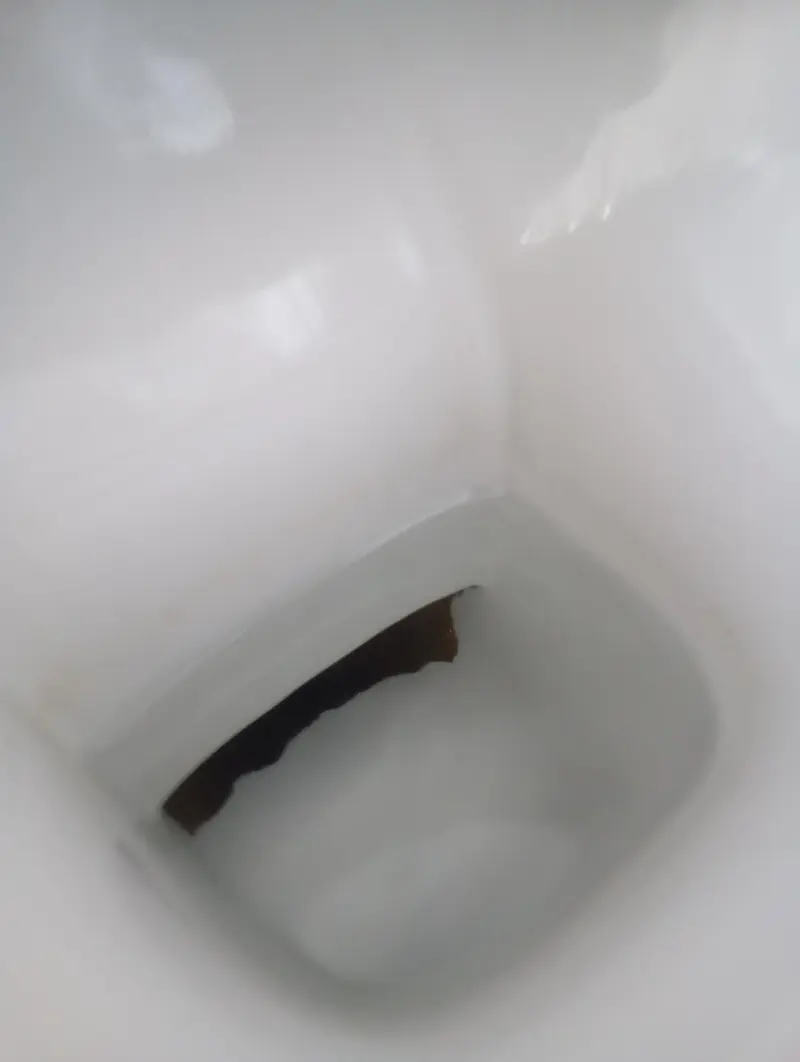
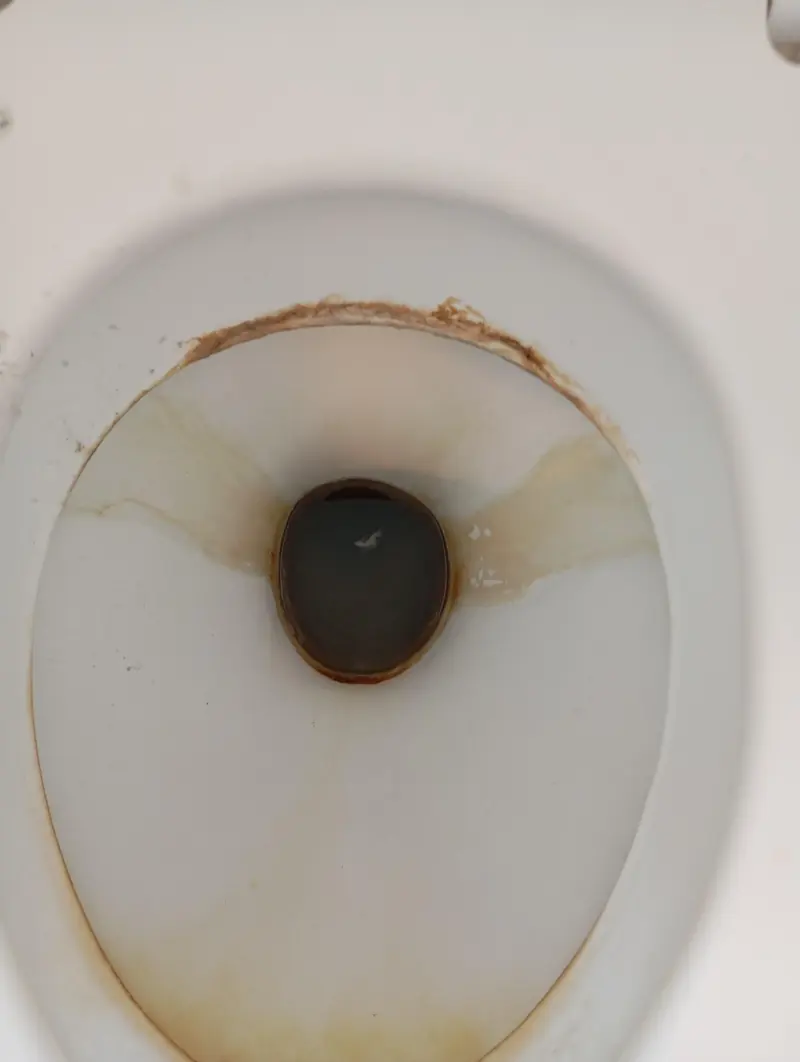
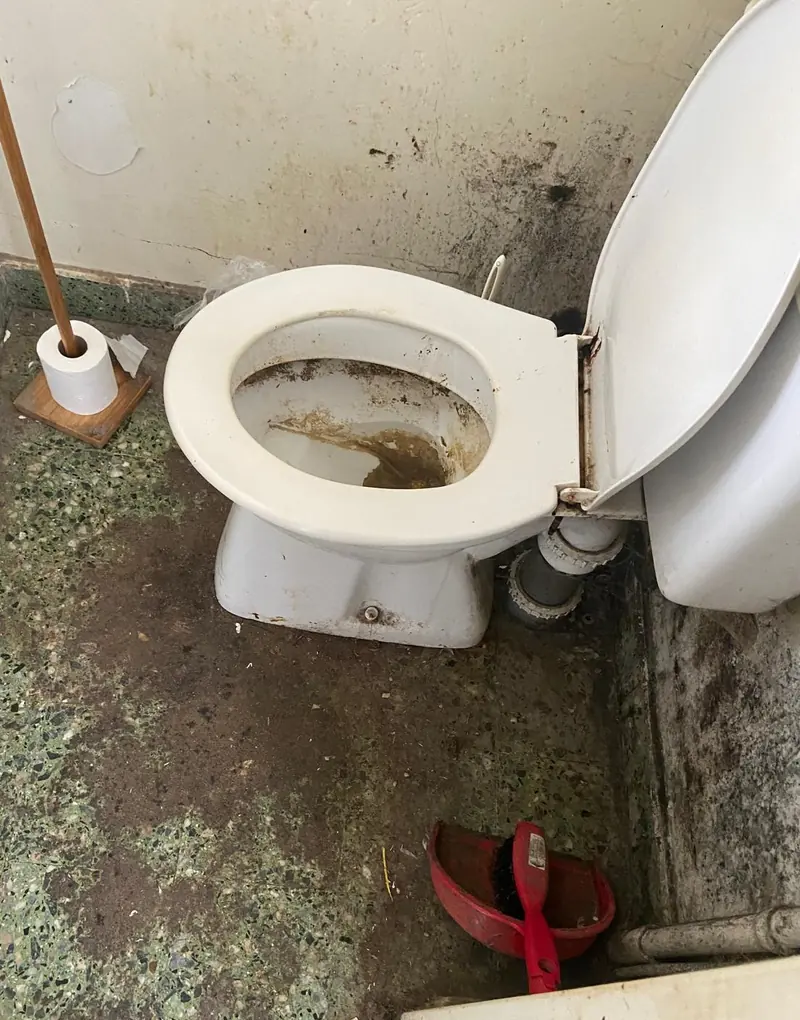
Rather have us do it?
Add the "Toilet descaling" option (€50 incl. VAT per toilet) to your home cleaning. Free quote, quick reply.
Get a free quoteThe method, step by step
This is the method our cleaners follow. It works on light and old limescale alike; only the contact time changes.
1. Ventilate, put on gloves, remove toilet blocks
Open the window or turn on the extractor. Remove rim blocks and gels: some contain chlorine, which must never meet an acid descaler.
2. Lower the water level
The step almost everyone skips. If the product is diluted in the trap water, it never touches the scale. Turn off the supply, flush, then remove the remaining water with a sponge or small container until the deposit is exposed.
3. Apply the right product in the right place
Choose according to how thick the deposit is:
- Light scale (white, pale yellow): hot white vinegar or diluted citric acid, left for several hours, ideally overnight.
- Established scale (dark yellow, brown): shop-bought toilet descaling gel, applied under the rim and into the emptied trap.
- Old, thick, black scale: strong professional toilet descaler, strictly following the label, left for the stated time (often 30 to 60 minutes).
4. Brush, then work on what's left
Brush hard, especially under the rim and in the trap. If a thin crust remains, a sanitary pumice stone, always wet, can remove it. Never on a dry bowl, on already damaged glaze, or on resin or coloured bowls.
5. Rinse, restore the water, check
Turn the supply back on and flush several times. Check under the rim with a torch: that's where limescale comes back first.
Mistakes never to make
We regularly see bowls damaged by good intentions. The three most common mistakes:
Mixing bleach and descaler
Using a standard descaler on a macerator toilet
Hydrochloric-acid gels are not recommended for macerator or chemical toilets: they can attack seals and the mechanism. Use a descaler made for macerators.
Scraping dry with a metal tool
Steel wool, knives or screwdrivers scratch the glaze. A scratched bowl scales even faster afterwards, because limescale grips the scratches.
Key points
- Empty the trap before applying the product: that's what makes the difference.
- Never use bleach just before or after an acid descaler.
- Scratched or cracked glaze won't turn white again; limescale almost always comes off.
When to call a professional
Light limescale is easy to treat yourself. We recommend handing it to a pro in three situations:
The scale is black, thick, and keeps coming back
You then need to lower the water, do several applications and brush between each. Allow one to two hours of work depending on the deposit.
Before a move-out inspection or a new let
A scaled toilet is one of the first things a landlord or new tenant notices. We include it in our end-of-tenancy cleaning.
When the whole home is dirty
If the toilet looks like the last photo above, descaling is only part of the job. See our very dirty home cleaning: quote from photos.
Summary table
| What you see | Treatment | Contact time | Good to know |
|---|---|---|---|
| White or grey film | Hot white vinegar | Overnight | Ideal as monthly upkeep |
| Yellow streaks under the rim | Toilet descaling gel | 30 min | Apply under the rim, not just the bottom |
| Brown ring at the waterline | Descaling gel + emptied trap | 30 to 60 min | Brush, then repeat if needed |
| Thick black bottom | Strong descaler, several applications | 1 to 2 h in total | Gloves, ventilation, never with bleach |
| Scaled macerator toilet | Macerator descaler | Per label | No hydrochloric acid |
| Scratches, dull glaze | No product | — | Permanent damage, not limescale |
White toilets, without spending your Saturday on them
Our cleaners descale, clean and disinfect your bathroom in Paris and Île-de-France. Products and equipment included.
Book my cleaning
 01 89 19 68 69


